

Small class sizes are one of those details that can sound like a minor bullet point in a school brochure, but in practice they shape almost everything about a student’s daily experience – from how much individual attention they get, to how comfortable they feel speaking up, and how quickly gaps in understanding get noticed and addressed. Here’s why small class sizes matter more than they might first appear.
What Counts as “Small” Class Sizes?
There’s no single official threshold, but in international education, a small class typically means that a teacher genuinely knows each student individually – their strengths, their struggles, and how they learn best – rather than managing a room full of names and faces. The exact number matters less than what it allows a teacher to actually do.
More Individual Attention, Faster Progress
In a smaller class, a teacher notices when a specific student is starting to struggle with a topic well before it shows up in a test result – and can adjust in real time rather than waiting for a scheduled review. That responsiveness compounds over a school year, resulting in meaningfully different academic progress.
Stronger Teacher-Student Relationships
Small classes make it realistic for a teacher to understand not just what a student knows, but how they think, for example, which questions they’re comfortable asking, and the ones they’re quietly avoiding. That relationship is often what separates a student who asks for help early from one who quietly falls behind.
More Confidence to Participate
Speaking up in a room of thirty classmates feels very different from speaking up in a room of twelve. Smaller classes tend to lower the social barrier to participating, asking questions, and making mistakes out loud, which, for many students, is where real learning actually happens.
Better Support for Different Learning Styles
Not every student learns the same way, and a smaller class gives a teacher more room to adjust, such as visual explanation for one student, more hands-on practice for another, without the lesson grinding to a halt for the rest of the class.
The Trade-Off: What Small Classes Are Not
Small classes aren’t a shortcut, and they don’t replace effort. Students still need to engage, study and put in the work. What small classes do change is how quickly a struggle is noticed and addressed, and how much individual guidance is realistically available along the way.
Small Class Sizes at HIF
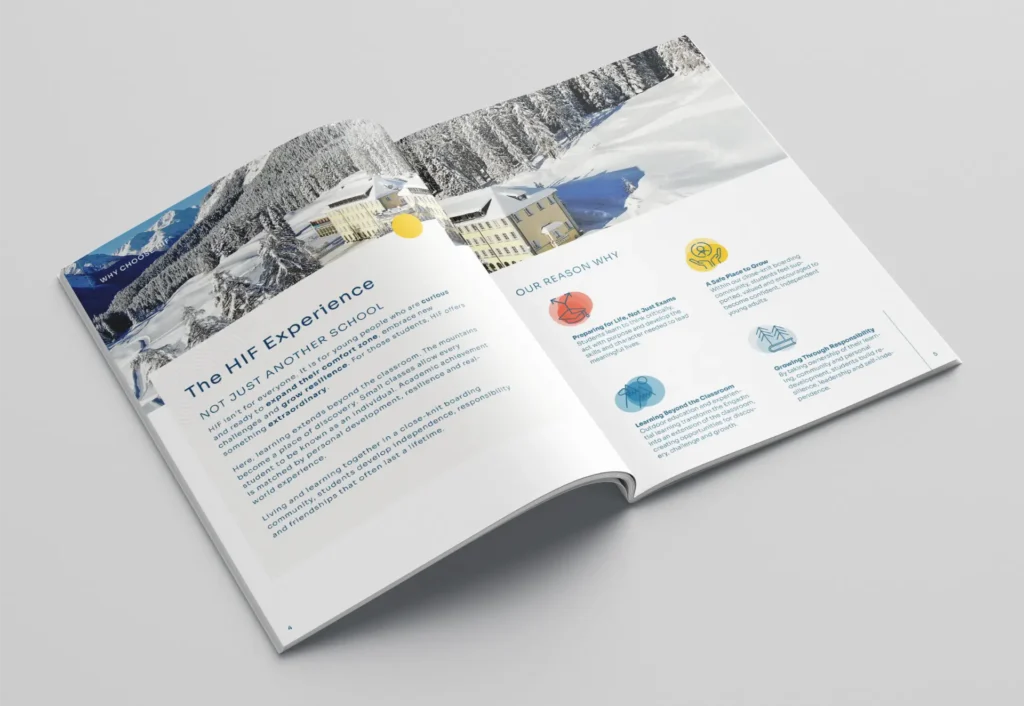
At Hochalpines Institut Ftan, small class sizes are a deliberate choice, not a byproduct of a small campus. The school describes its approach as making sure “every student is known as an individual.” Combined with a boarding structure in which staff are available outside class hours, individual attention extends well beyond the classroom. If you’d like to understand what that looks like in a typical week, our Admissions team is happy to walk you through it.
Key Learnings
- Small class sizes matter less for the specific number and more for what they allow: a teacher who genuinely knows each student individually.
- Smaller classes let teachers notice and respond to a student’s struggles in real time, rather than waiting for a test result to reveal them.
- Stronger teacher-student relationships in small classes often mean students ask for help earlier, before falling behind.
- Lower social barriers to participation in smaller classes tend to increase student confidence and engagement.
- Small classes give teachers more flexibility to adapt to different learning styles within the same lesson.
- Small classes support learning but don’t replace student effort; they change how quickly gaps are noticed and addressed.
- HIF deliberately maintains small class sizes, aiming for every student to be known as an individual, both academically and in boarding life.