





Academic programmes
iGCSE & A-Levels
Designed for curious, ambitious and independent learners, HIF’s international pathway is based on the globally recognised British curriculum, leading to the International General Certificate of Secondary Education (IGCSE) and A Levels, while extending learning beyond traditional academic qualifications.
The Concept of British International Education
iGCSE & A-Levels
Students begin with iGCSEs before progressing to A-Levels, developing subject expertise, critical thinking and independent learning skills while preparing for higher
education.
Beyond Traditional A-Levels
Alongside their academic studies, students complete an Extended Project Qualification (EPQ), engage with Melbourne Metrics and develop leadership capabilities through a range of experiences and initiatives.
MELBOURNE METRICS
Framework for developing future-ready capabilities such as:
- Self-awareness and reflection
- Collaboration and communication
- Resilience and adaptability
- Leadership and initiative
EXTENDED PROJECT
QUALIFICATIONS (EPQ )
Independent research project recognised by universities:
- Explore a topic of personal interest
- Develop critical thinking and academic
writing - Strengthen presentation and project
management skills - Widely recognised by universities
The Structure of the Curriculum
Through a combination of academic specialization, independent research, leadership development and experiential learning, students create a personalised pathway that prepares them for university and beyond.
INTERNATIONAL ADVANCED DIPLOMA
Short Courses (2 Years / 150 h)
Years 12 – 13 | Ages 16-18
Specialist learning beyond traditional subject boundaries – for example:
• Environmental Sciences
• Sustainability
• Entrepreneurship
• Leadership
• Digital Skills
IGCSE & A-LEVEL QUALIFICATIONS
A-LEVELS (2 YEARS / 900 h)
Years 12 – 13 | Ages 16-18
Specialisation in 3-4 subjects to pursue individual strengths and prepare for university study in greater depth. Includes:
• Extended Project Qualification (EPQ)
• Melbourne Metrics
• Leadership Development
IGCSE (2 YEARS / 900 h)
Years 10 – 11 | Ages 14-16
A broad academic foundation that develops subject knowledge, analytical thinking and independent learning skills. Subjects include:
• English
• Mathematics
• Biology
• Chemistry
• Geography
• Physical Education
• Art & Design
• Languages
Why British International Education?
The International Advanced Diploma recognises students who combine academic specialisation with independent research, leadership development and additional shortcourse learning. The result is a distinctive educational experience that extends well beyond traditional A-Levels and prepares students for university and future careers.
Where can it lead?
Students graduate with:
- Internationally recognised qualification
- Academic specialisation in chosen subjects
- Independent research experience
- Leadership and personal development skills
- A distinctive portfolio for competitive university applications
Start your international education journey
Book your Virtual Meeting with our team to get an overview of our academic pathways, boarding and sports, and ask anything that matters to you.
A Day in the Life of an international Student
Each day is different at HIF, depending on the season and your individual curriculum. Students have ample time away from lessons to focus on wellbeing, to study, and to relax. HIF also offers unmatched opportunities to gain incredible knowledge and experiences through our alpine environment, such as learning about natural sciences or skiing the slopes.
A typical day looks like this, with sample timetables for Years 12 and 13 below.
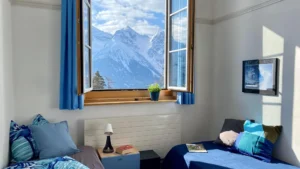
Wake up to mountain views and fresh Alpine air
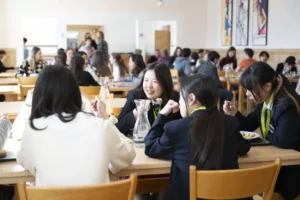
Breakfast with friends in the dining hall

Morning lessons or training sessions on the slopes or trails
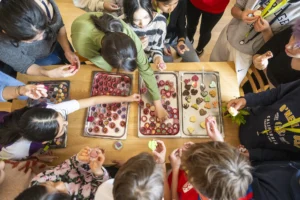
Freshly cooked, seasonal lunch and time to relax in the boarding house

Afternoon classes, workshops, or sports training
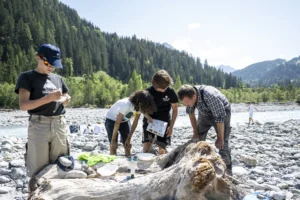
Supported study time, extra training, or outdoor adventures
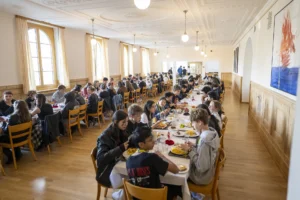
Dinner: great food together with friends to share stories and laughter
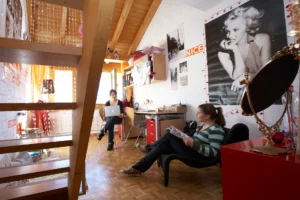
Study time, activities, or relaxing with friends before lights out
Real-world contexts
Experiential learning via carefully curated opportunities with top universities, leading companies and NGOs gives students an edge.