

A Levels are widely respected by universities for their academic depth, but strong exam results alone don’t automatically constitute real university preparation. Genuine preparation is broader than the syllabus — it’s about subject choice, study habits, and, increasingly, evidence of skills beyond the classroom. Here’s what that looks like in practice.
What “University Preparation” Really Means
Universities aren’t only assessing whether a student can pass exams; they’re assessing whether a student is ready to study independently, manage their own time, and think critically about a subject in depth. A Levels are structured to build exactly that: fewer subjects, studied more deeply, over two years.
Subject Choice: The First Big Decision
Choosing three or four A Level subjects is one of the most consequential academic decisions a student makes before university. Good guidance at this stage, grounded in a student’s IGCSE performance and genuine interests, not just perceived prestige, makes a real difference to both outcomes and motivation over the following two years.
Study Skills That Go Beyond the Syllabus
The jump from IGCSE to A Level is as much about how students study as what they study, with longer pieces of work, extended essays, more independent research and less hand-holding. Schools that explicitly prepare students for this transition, rather than assuming it happens automatically, tend to see smoother starts to the two-year course.
Real-World Skills Alongside Academics
Increasingly, universities and employers are looking for evidence beyond exam grades — practical skills, initiative, and real-world application. At HIF, this is addressed directly through the International Advanced Diploma (IAD), which pairs A Level study with practical, real-world skills across five defined pathways, strengthening university applications beyond grades alone.
University Guidance and Applications
A good academic programme supports students well before the final application deadline — helping narrow down course and country choices, preparing personal statements or equivalent application materials, and making sure predicted grades and subject combinations align with what target universities actually require.
How HIF Supports This Journey
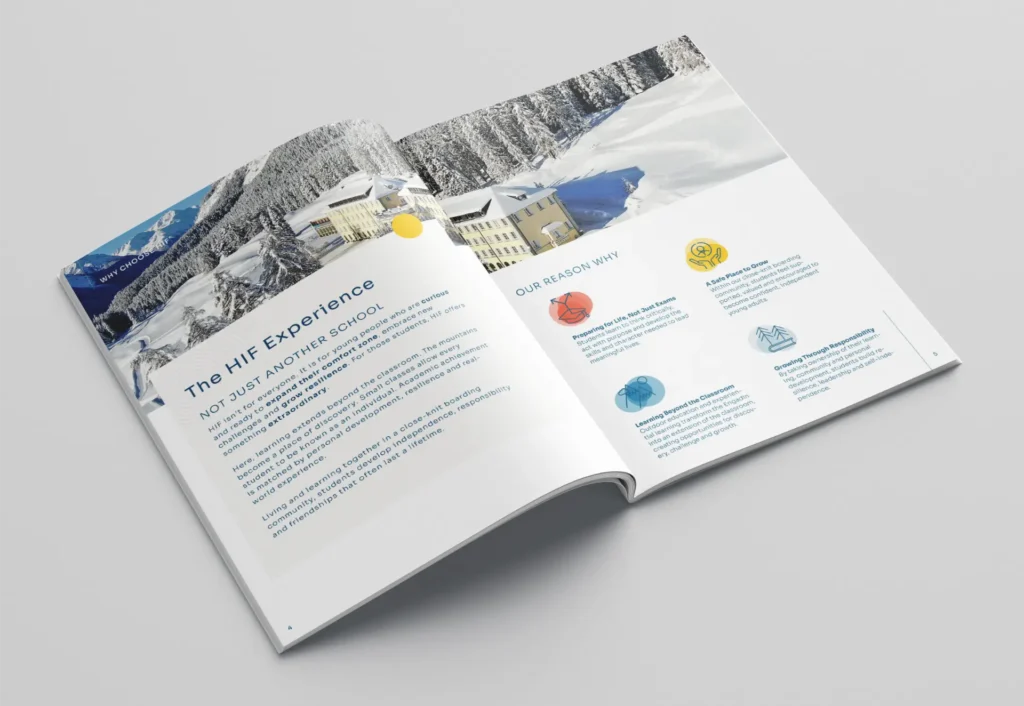
At Hochalpines Institut Ftan, students follow the National curriculum for England through to A Levels, with the option to combine this with the International Advanced Diploma for added real-world skills alongside academic study. Small class sizes mean subject and university guidance is genuinely tailored to each student, not delivered as a one-size-fits-all process. If you’d like to understand how this pathway could work for your child, our Admissions team is happy to talk it through with you.
Key Learnings
- A Levels prepare students for university by building depth in fewer subjects and requiring more independent study, not just exam technique.
- Subject choice at A Level is a major decision best guided by IGCSE performance and genuine interest, not perceived prestige alone.
- The transition from IGCSE to A Level requires new study skills; schools that prepare students explicitly for this see smoother transitions.
- Universities increasingly value evidence beyond exam grades, such as practical, real-world skills.
- HIF’s International Advanced Diploma (IAD) pairs A Level study with real-world skills across five defined pathways.
- Strong university preparation includes guidance on course and country choice, application materials, and aligning grades with requirements.
- HIF offers the National curriculum for England through to A Levels, combinable with the IAD, within small classes that allow tailored guidance.